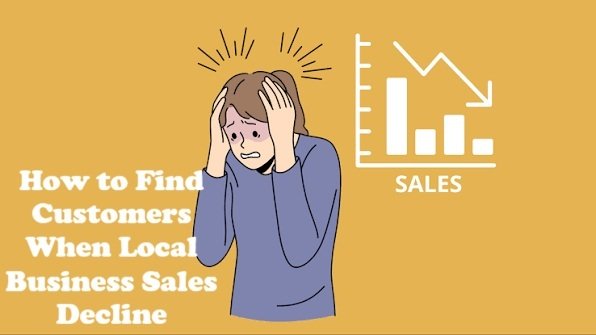
A decline in sales can create serious challenges for a local business. Whether you operate a grocery store, clothing shop, salon, restaurant, repair service, coaching centre, or small manufacturing unit, fewer customers can affect cash flow and make it harder to cover operating expenses. Seasonal changes, stronger competition, shifting customer preferences, and reduced local spending may all contribute to the problem.
However, declining sales do not always mean that customers have lost interest in your business. Sometimes people cannot find you online, your marketing has become less effective, or competitors are offering a more convenient experience. By understanding what has changed and taking practical steps to attract buyers, you can rebuild customer demand without spending excessively on advertising.
Identify Why Your Sales Are Declining
Before investing in marketing, investigate why fewer customers are purchasing from your business. Review sales records from recent months and compare them with the same period in previous years, if available. This helps you distinguish a temporary seasonal decline from a longer-term problem.
Consider whether the number of customers has decreased, average spending has fallen, or existing customers are visiting less frequently. Each situation requires a different response.
For example, a restaurant experiencing fewer first-time visitors may need better local visibility, while a clothing shop with regular visitors but smaller purchases may need to review its product range and pricing.
Speak with existing customers and ask what could improve their experience. Review customer complaints, online reviews, product availability, service quality, and competitor offerings.
Avoid assuming that lowering prices is the only solution. Customers may be leaving because of inconvenient opening hours, limited stock, slow service, or poor communication rather than price alone.
Improve Your Visibility on Google
Many people search online before visiting a nearby shop or hiring a local service provider. A business that does not appear clearly in local search results can lose potential customers even when its products and services are competitive.
Create or update your Google Business Profile if your business is eligible. Ensure that your business name, address or service area, telephone number, opening hours, and categories are accurate. Add recent photographs, respond professionally to reviews, and keep important information updated.
For example, a local electrician can provide clear information about service areas, operating hours, and the types of electrical work offered. A bakery can display photographs of its products, opening times, and ordering options.
Encourage satisfied customers to leave honest reviews without offering incentives that violate platform policies. Respond politely to negative feedback and explain how you are addressing genuine problems.
A complete, accurate profile can help customers discover your business through Google Search and Maps, although visibility and rankings are not guaranteed.
Use WhatsApp and Social Media to Reach Nearby Buyers
Social media and messaging platforms provide affordable ways to communicate with existing customers and attract new ones. Choose channels based on the type of business you operate and where your customers are most active.
WhatsApp Business can help you display products, share business information, answer enquiries, and manage orders. Instagram and Facebook may be useful for visually appealing products, food businesses, clothing retailers, salons, and local service providers.
Instead of posting only promotional messages, publish content that demonstrates your products and expertise. You could share product demonstrations, new arrivals, customer-approved testimonials, short tutorials, useful tips, and behind-the-scenes photographs.
For example, a salon could share hairstyle ideas and explain available services, while a home appliance repair business could publish maintenance tips and explain common warning signs.
Include a clear next step, such as calling for an appointment, requesting a quotation, or visiting the shop. Obtain appropriate consent before sending promotional messages and avoid repeatedly contacting people who have not expressed interest.
Offer a Reason to Choose Your Business
When sales decline, examine what makes your business different from competing options. Customers need a clear reason to visit you rather than another nearby provider.
Your advantage might be reliable service, specialised products, convenient delivery, personalised assistance, transparent pricing, or faster turnaround times.
Consider introducing a practical offer that encourages customers to try your business. Examples include a first-visit package, a product bundle, free delivery above a minimum order value, or a limited-period service discount.
However, calculate the costs before launching a promotion. A discount that attracts customers but leaves little or no profit may worsen your financial position.
You can also improve convenience by offering advance booking, digital payments, home delivery where practical, or easier ordering through messaging platforms.
The goal is to deliver meaningful value rather than compete only on price.
Bring Back Existing Customers
Finding new customers is important, but previous buyers may already know and trust your business. Reconnecting with them can be an efficient way to generate repeat sales.
Review your customer records and identify people who have not purchased recently. Where you have permission to contact them, send a relevant update about new products, seasonal services, or useful offers.
For example, a car service centre might remind previous customers about upcoming maintenance, while a clothing retailer could inform interested customers about a new collection.
Personalise messages where practical. A relevant offer based on a customer’s previous interests is more useful than a generic message sent to everyone.
You can also introduce a referral programme that rewards genuine recommendations, provided the incentive makes financial sense. Excellent service remains essential because customers are more likely to recommend businesses that consistently meet their expectations.
Build Partnerships With Other Local Businesses
Partnerships can help you reach customers who already visit businesses serving a similar audience.
For example, a bakery could collaborate with an event planner, a fitness centre could partner with a sports equipment shop, or a website designer could work with a local printing business.
You might exchange referrals, create joint offers, participate in local events, or display each other’s promotional materials with permission.
Choose partners whose customers are relevant to your products or services. Agree on responsibilities, costs, and referral arrangements in advance to avoid misunderstandings.
Local trade associations, community groups, exhibitions, and business networking events can also introduce you to potential customers and commercial buyers.
These activities may take time to produce results, but they can build relationships that generate repeat business over the long term.
Use Local Advertising More Strategically
Paid advertising can help when organic visibility and referrals are insufficient, but spending should be controlled carefully.
Local businesses can test geographically targeted advertising on suitable platforms, promote specific products, or advertise services to people in their operating area. Flyers, local publications, community events, and storefront signage may also work depending on the audience.
Start with a small budget and one clear objective, such as generating calls, appointment bookings, or store visits. Track enquiries, conversions, and the cost of acquiring each customer.
Do not judge an advertisement only by impressions, views, or likes. Measure whether it produces actual business and whether the resulting sales generate enough profit to justify the expense.
Stop or revise campaigns that consistently fail to attract relevant customers.
Measure Results and Improve Your Approach
Create a simple weekly sales tracker recording customer enquiries, new customers, repeat purchases, average order value, revenue, and marketing expenses.
Review which activities generate the most valuable customers. If WhatsApp enquiries produce regular orders while a paid campaign produces little revenue, consider reallocating your budget.
Test one or two changes at a time so you can understand what is working. Continue gathering customer feedback and adjust your products, pricing, and service based on evidence rather than assumptions.
Conclusion
Finding customers when local business sales decline requires more than advertising discounts. Start by understanding why sales have fallen, improve your online visibility, communicate through relevant digital channels, reconnect with previous customers, and build partnerships in your community.
Offer genuine value, monitor the results of your marketing, and focus on attracting customers who are likely to return. Consistent service and a clear understanding of local demand can help your business recover sales and develop a stronger customer base.
Frequently Asked Questions
Q. How can a local business attract customers without spending much money?
Improve your Google Business Profile, request honest customer reviews, reconnect with previous customers, publish useful social media content, and develop referral partnerships with nearby businesses.
Q. Should I reduce prices when local sales decline?
Not automatically. First identify why customers are leaving. A targeted offer may help, but better service, convenience, product availability, or clearer communication may solve the problem without reducing margins.
Q. How can I get more customers through Google?
Keep your eligible Google Business Profile accurate, add current photographs, update business hours, respond to reviews, and ensure your website contains useful information about your products, services, and location.
Q. Is WhatsApp Business useful for local shops?
Yes. It can help businesses display products, answer enquiries, communicate order details, and maintain customer relationships. Promotional messages should be relevant and sent with appropriate consent.
Q. How long does it take to recover declining sales?
There is no fixed timeline. Results depend on the cause of the decline, local competition, customer demand, and the effectiveness of your changes. Monitor weekly indicators and adjust your approach based on actual sales and enquiries.